AEO for Ecommerce: Answer Engine Optimization Guide
Answer Engine Optimization (AEO) is how ecommerce brands get cited by AI. Learn how to optimize your product pages for ChatGPT, Perplexity, and AI search.

TL;DR: Answer Engine Optimization (AEO) is how your products get cited and recommended by AI assistants. Unlike SEO which focuses on ranking, AEO focuses on being the answer AI gives when shoppers ask questions.
What is Answer Engine Optimization?
Answer Engine Optimization (AEO) is the practice of structuring your content so AI systems can extract and present it as direct answers to user questions.
Traditional SEO asks: "How do I rank higher in search results?"
AEO asks: "How do I become the answer AI gives?"
For ecommerce, this distinction matters enormously. When someone asks ChatGPT "What's the best knife for home cooks under $100?", you don't want to rank in results—you want to BE the recommendation.
AEO vs SEO: What's Different for Ecommerce?
| Aspect | Traditional SEO | AEO | |--------|----------------|-----| | Goal | Rank in search results | Be cited in AI answers | | Success metric | Position, clicks, traffic | Mentions, citations, recommendations | | Content focus | Keywords, backlinks | Constraint answers, structured data | | Competition | Other ranked pages | Any information source AI can access | | User journey | Click through to your site | May never visit your site |
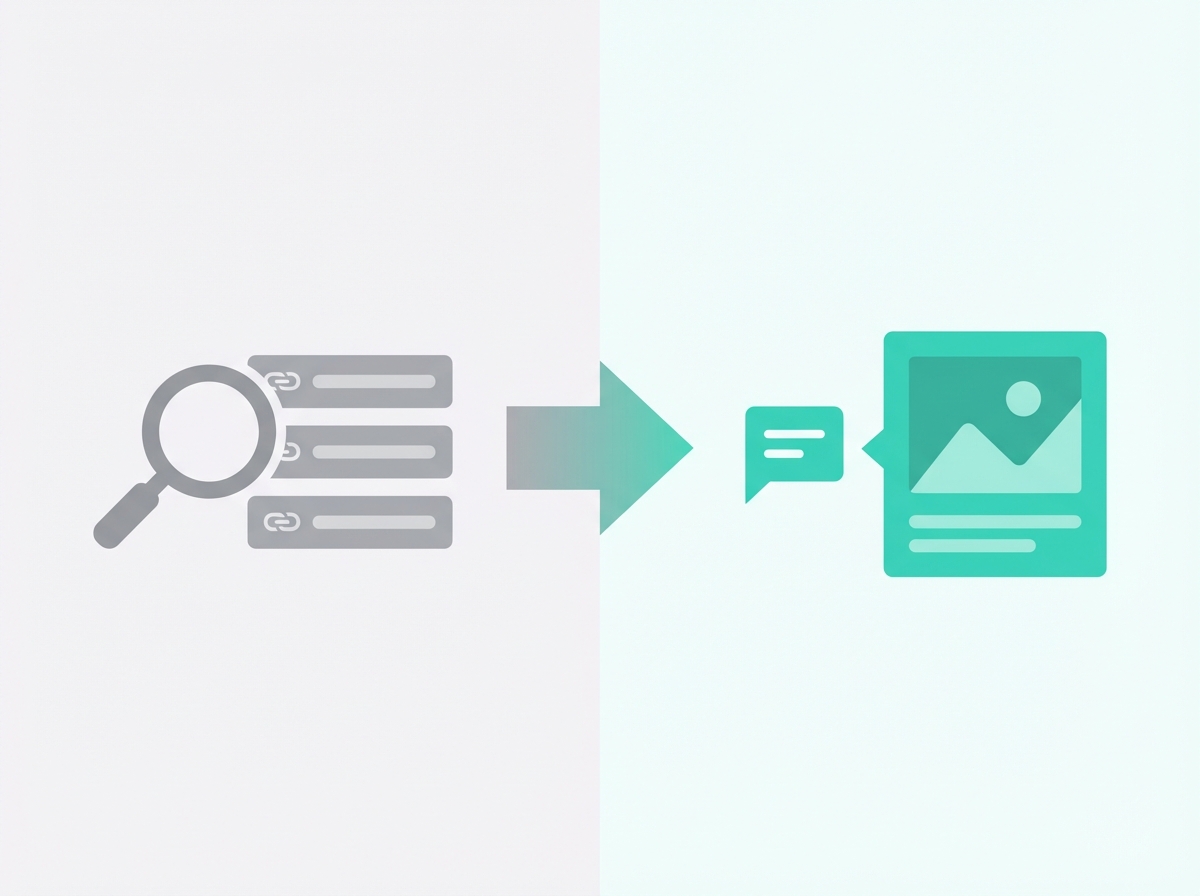
Here's the uncomfortable truth: AEO can drive sales even when users never visit your website. If ChatGPT recommends your product by name, users might go directly to Amazon or your store to buy—without ever seeing your product page.
Why AEO Matters for Ecommerce Now
The data tells the story:
- 60%+ of shoppers use AI assistants for product research
- 25% of organic search traffic will shift to AI by end of 2026 (Gartner)
- Zero-click searches continue rising as AI provides direct answers
For product pages specifically, AEO matters because:
-
AI shopping is growing fast. ChatGPT, Perplexity, and Google AI all have shopping features. They recommend products directly.
-
Traditional SEO isn't enough. You can rank #1 on Google and still be invisible to AI assistants if your content isn't structured for extraction.
-
First movers win. AI systems learn patterns. Brands establishing themselves as authoritative answers now will have an advantage as AI shopping scales.
The AEO Framework for Product Pages
1. Answer the Question Directly
AI extracts direct answers. Structure your product pages to provide them.
Bad product description: "Our premium chef's knife combines traditional Japanese craftsmanship with modern innovation. Experience the difference quality makes in your kitchen."
AEO-optimized description: "The Miyabi Kaizen 8-inch chef's knife is best for home cooks who want Japanese-style precision without professional-grade maintenance. The SG2 micro-carbide steel holds an edge 3x longer than German steel, while the 9.5° blade angle provides sharper cuts for vegetables and fish."
The second version answers specific questions AI might receive:
- What's it best for? (Home cooks wanting precision)
- How long does it stay sharp? (3x longer than German steel)
- What's the blade angle? (9.5°)
- What foods is it good for? (Vegetables and fish)
2. Cover Buyer Constraints
AI matches products to constraints. Cover all the common ones for your category:
Universal constraints:
- Price/budget
- Who it's for (skill level, use case)
- Who it's NOT for
- Size/dimensions
- Compatibility
Category-specific constraints:
- Kitchen products: Dishwasher safe? Material? Weight?
- Electronics: Battery life? Compatibility? Warranty?
- Apparel: Fit? Care instructions? Material composition?
- Home goods: Assembly required? Dimensions? Weight capacity?
3. Use FAQ Format
AI loves FAQs because they're pre-structured question-answer pairs.
Q: Is this knife dishwasher safe?
A: No. Hand wash only to preserve the edge. The high-carbon
steel can discolor in dishwashers.

Q: What cutting board should I use?
A: Use wood or soft plastic boards. Hard surfaces like glass
or bamboo will dull the blade faster.

Q: How often does it need sharpening?
A: With normal home use (cooking 4-5 times per week),
sharpen every 6-12 months. Hone with a steel before each use.
4. Provide Comparison Context
AI needs to explain why your product vs alternatives. Include honest comparisons:
"Compared to Wusthof Classic: Our blade is harder (61 HRC vs 58 HRC) and holds an edge longer, but requires more careful handling—no twisting through bones.
Compared to budget options: You'll pay 3x more upfront but won't need replacement for 10+ years with proper care."
5. Structure Data Properly
Implement complete Product schema with all recommended fields:
{
  "@type": "Product",
  "name": "Miyabi Kaizen 8-inch Chef's Knife",
  "description": "Japanese SG2 steel chef's knife for home cooks",
  "brand": "Miyabi",
  "sku": "MK-8001",
  "offers": {
    "@type": "Offer",
    "price": "179.99",
    "priceCurrency": "USD",
    "availability": "InStock"
  },
  "aggregateRating": {
    "@type": "AggregateRating",
    "ratingValue": "4.8",
    "reviewCount": "342"
  }
}
AEO Content Types for Ecommerce
Product Pages
Your most important AEO asset. Every product page should:
- Answer the top 10 questions buyers ask
- Include Best For / Not For sections
- Have complete schema markup
- Provide comparison context
Category Pages
Often overlooked for AEO. Optimize them to answer:
- "What's the best [category] for [use case]?"
- "What should I look for in a [category]?"
- "What's the difference between [type A] and [type B]?"
Buying Guides
Create comprehensive guides that AI can cite:
- "How to Choose a [Product Category]"
- "[Product] Buying Guide for Beginners"
- "[Product A] vs [Product B]: Which to Buy"
FAQ Pages
Dedicated FAQ pages can rank for question-based queries and get pulled into AI answers. Structure them with FAQ schema.
Common AEO Mistakes to Avoid
Writing for Keywords Instead of Questions
Wrong: Stuffing "best chef knife" throughout the page Right: Answering "What makes a good chef knife for home cooks?"
Being Vague to Appeal to Everyone
Wrong: "Perfect for any kitchen!" Right: "Best for home cooks who prioritize edge retention over easy maintenance"
Hiding Key Information
Wrong: Burying dimensions in a specifications tab Right: Featuring dimensions prominently with comparisons ("fits standard knife blocks")
Ignoring Limitations
Wrong: Never mentioning what the product can't do Right: Clearly stating "Not recommended for..." to build trust and help AI filter appropriately
Inconsistent Information
Wrong: Different specs on your site vs Amazon vs reviews Right: Same accurate information everywhere AI might find it
Measuring AEO Success
What to Track
Citation tracking:
- Is your brand mentioned when you test AI queries?
- Are you recommended or just listed?
- What context surrounds your mentions?
Query testing:
- Test 10-20 relevant queries monthly across ChatGPT, Perplexity, Claude, and Google AI
- Document which products get recommended
- Note the reasoning AI provides
Indirect metrics:
- Direct traffic (people who heard about you from AI)
- Brand search volume (people searching your brand name)
- Conversion rate on product pages (AI-referred visitors often have high intent)
Testing Protocol
- Identify your top 10 products
- List 5 common questions for each
- Test those questions monthly across AI platforms
- Track mentions, recommendations, and accuracy
- Update content based on gaps
AEO Implementation Checklist
For Each Product Page
- [ ] Clear "Best For" section (3-5 specific use cases)
- [ ] "Not Ideal For" section (honest limitations)
- [ ] FAQ with 5+ questions
- [ ] Complete Product schema
- [ ] Dimensions with real-world comparisons
- [ ] Compatibility information
- [ ] Comparison to 2-3 alternatives
- [ ] Consistent information across all platforms
For Your Store Overall
- [ ] Category pages answer "best for" questions
- [ ] Buying guides for major categories
- [ ] Consistent brand voice and claims everywhere
- [ ] Schema implemented site-wide
- [ ] Monthly AI testing protocol
Related reading: what WebMCP means for ecommerce · how AI shopping assistants choose products · constraint coverage
FAQ
Is AEO replacing SEO?
No. AEO complements SEO. You still need SEO for search visibility and site traffic. AEO adds a layer of optimization for AI discovery.
How long until I see AEO results?
AI systems index content at different speeds. You might see changes in weeks for well-crawled sites. Test monthly to track progress.
Do I need different content for AEO vs SEO?
Not entirely different, but structured differently. AEO content is more direct, more FAQ-formatted, and more focused on answering specific questions.
Which AI platforms matter most for ecommerce?
ChatGPT (with shopping features), Perplexity, and Google AI Overview are currently most important. This will evolve as more platforms add shopping capabilities.
Can small stores compete with big brands in AEO?
Yes. AI often favors specific, accurate answers over brand recognition. A small store with excellent product information can outperform a big brand with vague descriptions.
Should I optimize for one AI platform specifically?
No. Structure content well once and it works across platforms. The fundamentals—direct answers, structured data, complete information—help everywhere.
See all 23 checks in our Product Page SEO Checklist for 2026.
Want to see how your product pages score for AI readiness? Scan your page free →
Ready to optimize your product pages?
Scan your listings for SEO and AI readiness issues in 30 seconds.
Run Free Scan