Why AI Assistants Skip Your Products (And How to Fix It)
Your products aren't showing up in AI recommendations. Here's exactly why ChatGPT, Perplexity, and other AI assistants skip certain products—and how to fix it.
TL;DR: AI assistants skip products when they lack confidence to recommend them. The most common reasons: missing limitation info, vague descriptions, incomplete specs, and no comparison context. All fixable.
The Invisible Product Problem
You've optimized for Google. You have good reviews. Your products are solid.
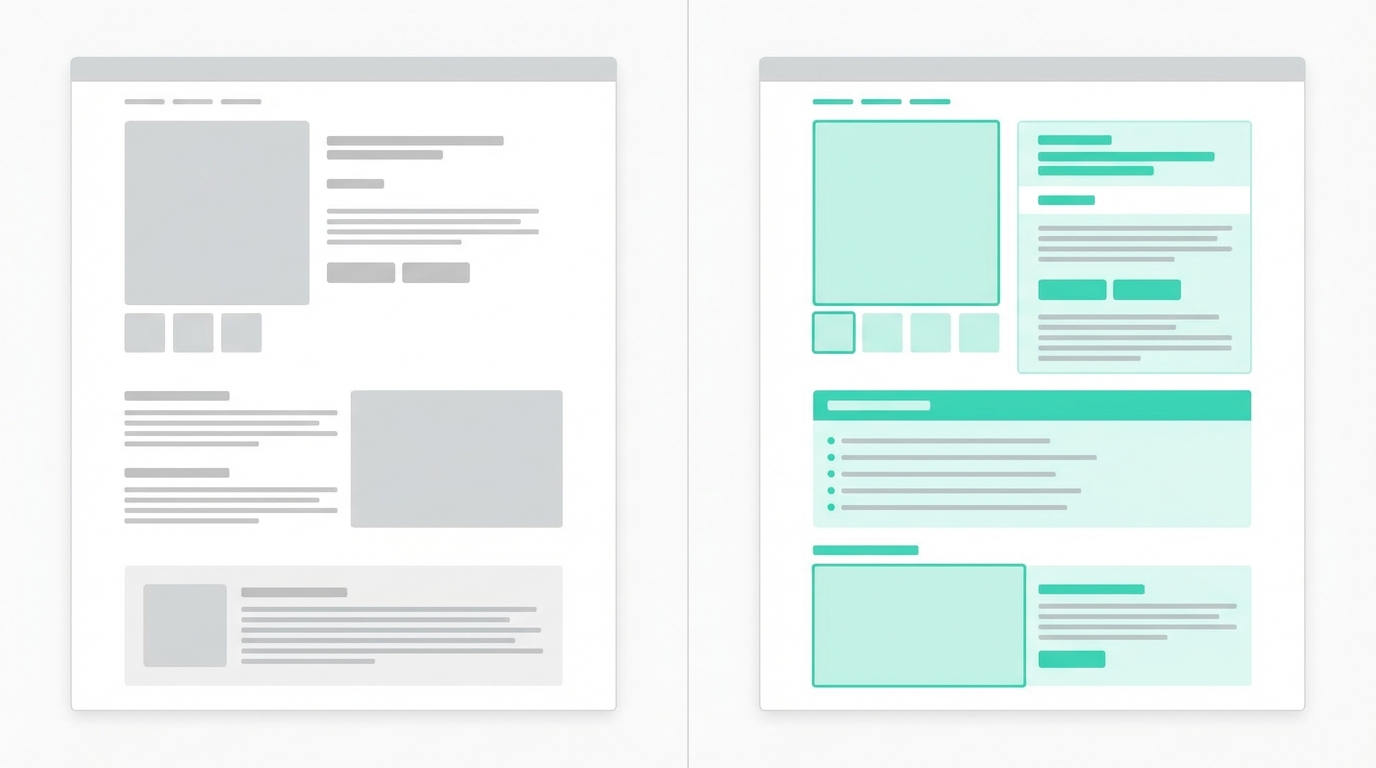
But when customers ask ChatGPT or Perplexity for recommendations, you're nowhere to be found. Your competitors get mentioned. You don't.
This isn't random. AI assistants skip products for specific, fixable reasons.
How AI Decides to Skip Products
AI assistants have a confidence threshold. Before recommending a product, they need to feel confident it's the right answer.
When confidence is low, AI does one of three things:
- Recommends a competitor with clearer information
- Adds heavy caveats ("This might work, but...")
- Asks the user for more clarification
Your goal: give AI enough information to recommend confidently.
Reason #1: No "Not For" Information
The problem:
AI assistants are terrified of bad recommendations. If they recommend a product to someone it's wrong for, that's a failure.
When your page doesn't say who the product ISN'T for, AI can't confidently recommend it to anyone. It doesn't know who to exclude.
What AI is thinking:
"This knife might be good for home cooks, but I don't know if it's bad for beginners. What if a beginner buys it and can't handle it? I'll recommend a safer option that clearly states it's beginner-friendly."
The fix:
Add explicit exclusions to every product page:
## Not Ideal For

- Complete beginners (the thin blade requires some knife skills)
- Cutting through bones (use a cleaver instead)
- Dishwasher users (hand wash only to preserve the edge)
- Those wanting a multipurpose knife (this is specialized for vegetables)
This seems counterintuitive—why tell people NOT to buy? But it makes AI confident to recommend you to everyone else.
Reason #2: Vague Descriptions
The problem:
Marketing language tells AI nothing useful.
"Experience unparalleled performance" doesn't answer any customer question. AI can't extract constraints from superlatives.
What AI is thinking:
"The user wants something quiet enough for early morning. This page says 'whisper-quiet technology' but I don't know what that actually means. This other brand says 64 decibels. I'll recommend that one since I can verify it meets the constraint."
The fix:
Replace vague claims with specific, measurable details:
| Vague | Specific | |-------|----------| | Powerful motor | 1400-watt motor | | Whisper quiet | 64 decibels | | Long-lasting battery | 8 hours playback | | Lightweight | 3.4 lbs | | Fast charging | 0-80% in 30 minutes | | Large capacity | 64 oz pitcher |
Every claim should be verifiable.
Reason #3: Missing Specifications
The problem:
Users ask constraint-specific questions. If your page doesn't have the spec, AI can't match the constraint.
What AI is thinking:
"User wants a monitor that fits on their 24-inch desk. This product page doesn't list dimensions. I'll skip it and recommend one that does."
The fix:
Include every specification someone might filter by:
Physical:
- Dimensions (with stand, without stand)
- Weight
- Color options
- Materials
Performance:
- Power/wattage
- Speed/capacity
- Battery life
- Noise level
Compatibility:
- What it works with
- What it doesn't work with
- System requirements
Practical:
- Assembly required?
- Maintenance needs
- Warranty length
Reason #4: No Use Case Specificity
The problem:
Your page doesn't say who the product is actually FOR. AI can't match it to user intent.
What AI is thinking:
"User wants a camera for bird photography specifically. This camera page talks about 'professional image quality' but never mentions wildlife or birds. This other brand specifically says 'ideal for wildlife and bird photography.' I'll recommend that one."
The fix:
Add explicit "Best For" sections:
## Best For

- Bird and wildlife photographers (fast autofocus tracks moving subjects)
- Sports photographers (20fps burst mode captures action)
- Travel photographers wanting one versatile lens
- Content creators shooting video and stills
Be specific about use cases, not generic about quality.
Reason #5: No Comparison Context
The problem:
Users often want to know how your product compares to alternatives. If you don't provide context, AI can't explain why you vs. competitors.
What AI is thinking:
"User is deciding between Brand A and Brand B. Brand A's page explains exactly how they differ from Brand B. Brand B's page never mentions competitors. I can make a stronger case for Brand A."
The fix:
Include honest comparisons on your page:
## How We Compare

**vs. Competitor A:**
We're $50 more but include a 10-year warranty vs their 2-year.
Our motor is 200W more powerful.

**vs. Competitor B:**
Similar price and features. We're quieter (64dB vs 72dB),
they have a larger capacity (72oz vs 64oz).

**vs. Budget Options:**
3x the price but built to last 10+ years.
Most budget options need replacement in 2-3 years.
Reason #6: Incomplete Schema Markup
The problem:
AI extracts structured data from your schema markup. Missing or incomplete schema means missing information.
What AI is thinking:
"I need to know the price and availability. This page has no structured data I can parse reliably. I'll recommend products where I can verify current price and stock status."
The fix:
Implement complete Product schema:
{
  "@type": "Product",
  "name": "Product Name",
  "description": "Clear description",
  "brand": { "@type": "Brand", "name": "Brand Name" },
  "sku": "SKU-12345",
  "offers": {
    "@type": "Offer",
    "price": "149.99",
    "priceCurrency": "USD",
    "availability": "InStock",
    "priceValidUntil": "2026-12-31"
  },
  "aggregateRating": {
    "@type": "AggregateRating",
    "ratingValue": "4.6",
    "reviewCount": "523"
  }
}
Reason #7: Contradictory Information
The problem:
Your website says one thing, Amazon says another, reviews say something else. AI loses confidence when sources conflict.
What AI is thinking:
"The product page says 8-hour battery life, but reviews consistently mention 5-6 hours. I can't trust this page's claims. I'll recommend a product with consistent information."
The fix:
Audit all your product information across platforms:
- Your website
- Amazon listing
- Other marketplaces
- Google Shopping feed
- Social media mentions
Make them all consistent and accurate.
Reason #8: No FAQ Section
The problem:
FAQs are pre-formatted question-answer pairs—the easiest format for AI to extract. No FAQ means missing easy extraction opportunities.
What AI is thinking:
"User asked if this is dishwasher safe. I'd have to parse through paragraphs of marketing copy to maybe find the answer. This other product has an FAQ that directly answers 'Is it dishwasher safe? Yes, all parts except the base.'"
The fix:
Add an FAQ section answering common questions:
**Is this dishwasher safe?**
Yes. The pitcher, lid, and blades are dishwasher safe.
Wipe the base with a damp cloth.

**How loud is it?**
64 decibels—similar to normal conversation.

**What's the warranty?**
10-year motor warranty, 2-year on other parts.

**Can it crush ice?**
Yes. Crushes ice in under 30 seconds.
The Complete Audit Checklist
Run through this for every product page:
Constraint Coverage:
- [ ] "Best For" section with 3-5 specific use cases
- [ ] "Not Ideal For" section with honest limitations
- [ ] All key specifications listed
- [ ] Compatibility information included
Content Quality:
- [ ] No vague marketing claims without specifics
- [ ] Measurable details for all performance claims
- [ ] FAQ section with 5+ questions
- [ ] Comparison to 2-3 alternatives
Technical:
- [ ] Complete Product schema markup
- [ ] Consistent information across all platforms
- [ ] Specifications in structured format (tables work well)
Quick Diagnostic: Why You're Being Skipped
Test your product with AI assistants. Ask:
"What's the best [product category] for [your target use case]?"
If you're not mentioned, identify the gap:
| AI Recommends | You're Missing | |---------------|----------------| | Product with clear specs | Specific specifications | | Product with "Best For" | Use case clarity | | Product with limitations listed | "Not Ideal For" section | | Product with comparisons | Competitive context | | Product with FAQ | FAQ section |
Related reading: 'Not Ideal For' section · 10 questions every product page must answer · how AI shopping assistants choose products
FAQ
How quickly can I fix this?
Most fixes take 1-2 hours per product page. Prioritize your top sellers first.
Will fixing these issues guarantee recommendations?
Not guaranteed, but significantly more likely. AI will consider you where it wasn't before.
How do I know if AI is now recommending me?
Test regularly. Ask AI assistants about your product category and specific use cases monthly.
Should I fix all products or start with bestsellers?
Start with your top 10-20 products. Learn what works, then apply to the rest.
What if my competitor has better information?
Then AI will recommend them. The fix is improving your information to match or exceed theirs.
Want to find exactly what's missing from your product pages? Run a free scan with ListingScrub →
For the complete list of checks, see our Product Page SEO Checklist for 2026.
Want to see how your product pages score for AI readiness? Scan your page free →
Ready to optimize your product pages?
Scan your listings for SEO and AI readiness issues in 30 seconds.
Run Free Scan