How to Get Your Products Recommended by ChatGPT
ChatGPT recommends products to millions daily. Learn what makes it choose certain products and how to optimize your listings.
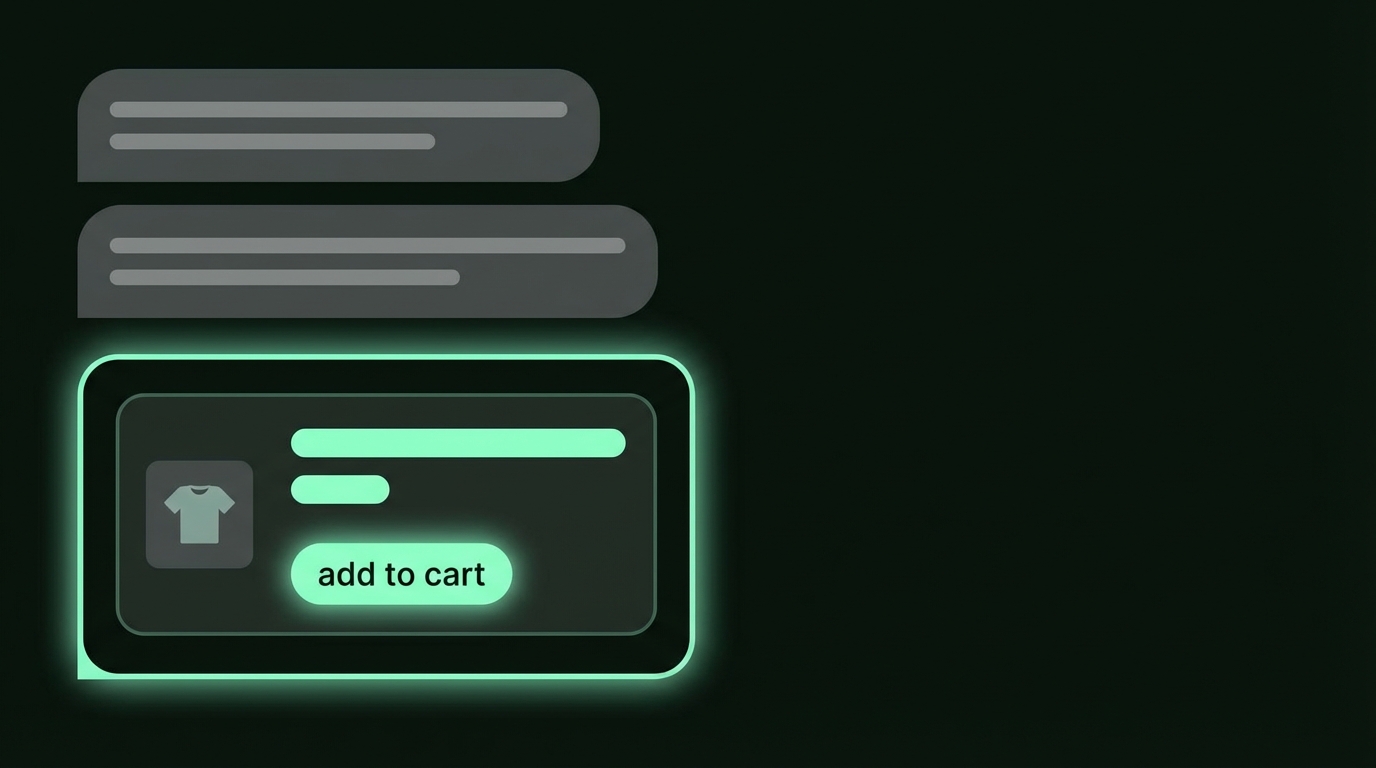
TL;DR: ChatGPT recommends products based on how well they match specific buyer constraints—not popularity or SEO rankings. To get recommended, your product pages need clear "Best For" statements, honest limitations, and complete specifications.
ChatGPT Is Now a Shopping Assistant
Over 800 million people use ChatGPT weekly. A growing percentage use it for shopping research:
- "What's the best standing desk under $500?"
- "I need a gift for my dad who likes woodworking"
- "Which air fryer is easiest to clean?"
When users ask these questions, ChatGPT doesn't show a list of links. It recommends specific products by name. If your product gets recommended, you get the sale. If it doesn't, you're invisible.
How ChatGPT Chooses Products to Recommend
ChatGPT evaluates products through a specific process.
Step 1: Understanding User Intent
ChatGPT parses the user's question into constraints:
User asks: "I need a laptop for video editing, budget around $1500, and I travel a lot so weight matters."
ChatGPT extracts:
- Product: Laptop
- Use case: Video editing
- Budget: ~$1500
- Constraint: Lightweight/portable
- Context: Frequent travel
Step 2: Gathering Product Information
ChatGPT pulls from multiple sources:
- Product pages and official specs
- Review sites and expert roundups
- User discussions on Reddit and forums
- Its training data about products
Your product page is just one source. If your page lacks information, ChatGPT fills gaps from other sources—which may be inaccurate or outdated.
Step 3: Matching Constraints
For each potential product, ChatGPT checks:
- Does this handle video editing? (Need specific specs)
- Is it around $1500? (Price must be stated)
- Is it lightweight for travel? (Weight must be explicit)
- Any dealbreakers? (Known issues, limitations)
Products with clear answers to all constraints rank higher.
Step 4: Generating the Recommendation
ChatGPT recommends products it feels confident about. Confidence comes from:
- Complete information available
- Consistent details across sources
- Clear differentiation from alternatives
- No major red flags or contradictions
What Makes ChatGPT Confident to Recommend
Complete Specifications
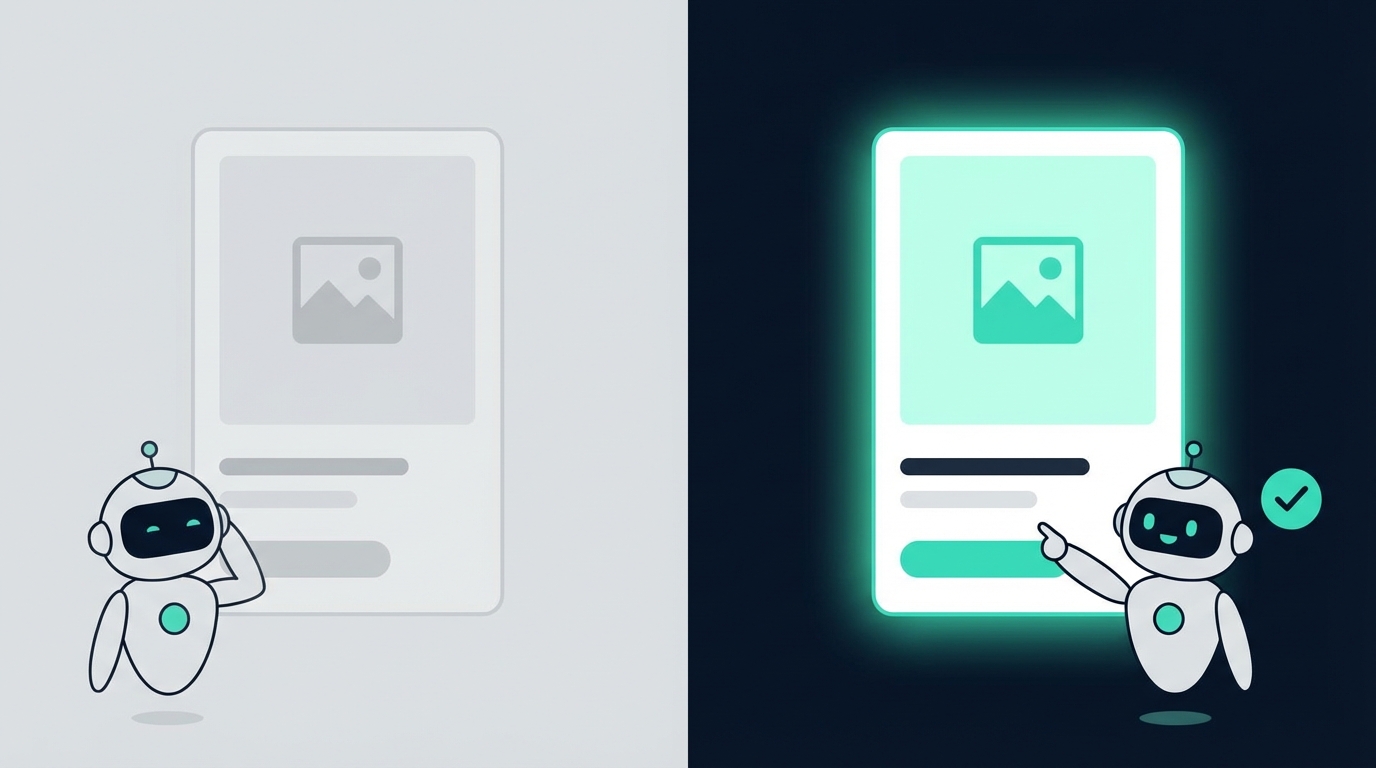
ChatGPT needs concrete details to match constraints.
Low confidence page: "Powerful performance for creative professionals. Lightweight design for working anywhere."
High confidence page: "14-inch display, M3 Pro chip (12-core CPU, 18-core GPU), 18GB RAM, 512GB SSD. Weight: 3.4 lbs. Handles 4K video editing in Premiere Pro and DaVinci Resolve without thermal throttling."
Explicit Use Cases
Tell ChatGPT exactly who this product is for.
Add to your page: "Best for:
- Video editors working with 4K footage
- Photographers using Lightroom and Photoshop
- Designers running Figma and Adobe Creative Suite
- Developers who also create content"
Honest Limitations
ChatGPT trusts pages that acknowledge what products can't do.
Add to your page: "Not ideal for:
- 8K video editing (need M3 Max for that)
- Gaming (integrated GPU limits frame rates)
- Users needing 32GB+ RAM
- Those prioritizing maximum screen size"
This helps ChatGPT confidently exclude your product when it's wrong for someone—and confidently recommend it when it's right.
Real-World Comparisons
Help ChatGPT explain why your product vs alternatives.
Add to your page: "How it compares:
- vs Dell XPS 15: Similar performance, we're 0.5 lbs lighter, they have more ports
- vs ThinkPad X1: We have better GPU for creative work, they have better keyboard
- vs budget options: 2x the price but lasts 5+ years vs 2-3 years"
Optimizing Product Pages for ChatGPT
Structure Your Description for Extraction
ChatGPT extracts information better from structured content.
Before (hard to extract): "Our amazing blender combines powerful performance with sleek design. The motor provides incredible blending power while remaining quiet enough for early morning smoothies. Multiple speed settings give you complete control."
After (easy to extract): "1400-watt motor blends ice and frozen fruit in 45 seconds. Noise level: 64 dB (quieter than average conversation). 10 speed settings plus 4 preset programs. 64 oz BPA-free pitcher. Dishwasher-safe blades and lid."
Add an FAQ Section
ChatGPT loves pulling from FAQs because they're pre-formatted Q&A.
## Frequently Asked Questions

**Can this blend frozen fruit?**
Yes. The 1400-watt motor handles frozen fruit, ice, and
nuts without pre-thawing.

**How loud is it?**
64 decibels—about the volume of normal conversation.
Quieter than most blenders in this power range.

**Is it dishwasher safe?**
The pitcher, lid, and blade assembly are dishwasher safe.
Wipe the base with a damp cloth.

**What's the warranty?**
10-year motor warranty, 2-year warranty on other parts.
Include Comparison Tables
Tables are highly extractable for AI.
| Feature | Our Blender | Competitor A | Competitor B |
|---------|-------------|--------------|--------------|
| Power | 1400W | 1200W | 1000W |
| Noise | 64 dB | 72 dB | 68 dB |
| Capacity | 64 oz | 48 oz | 64 oz |
| Warranty | 10 years | 5 years | 7 years |
| Price | $149 | $179 | $99 |
Use Schema Markup
Complete Product schema helps ChatGPT extract accurate data:
{
  "@type": "Product",
  "name": "PowerBlend Pro 1400",
  "brand": "BlendCo",
  "description": "1400-watt blender for smoothies and food processing",
  "sku": "PBP-1400",
  "offers": {
    "@type": "Offer",
    "price": "149.00",
    "priceCurrency": "USD",
    "availability": "InStock"
  },
  "aggregateRating": {
    "@type": "AggregateRating",
    "ratingValue": "4.6",
    "reviewCount": "1247"
  }
}
Testing If ChatGPT Recommends You
Manual Testing Process
- Open ChatGPT (GPT-4 with browsing if available)
- Ask questions your customers would ask
- See if your product gets mentioned
- Note what ChatGPT says about you
Test Prompts to Try
"What's the best [product category] for [your target use case]?"

"I need a [product] under [$your price]. What do you recommend?"

"[Your product name] vs [competitor]—which should I buy?"

"Is [your product] good for [common customer question]?"

"What are the pros and cons of [your product]?"
What to Look For
Good signs:
- Your product is mentioned by name
- Accurate specifications cited
- Positioned correctly (right use cases mentioned)
- Recommended for appropriate situations
Warning signs:
- Not mentioned at all
- Inaccurate information
- Positioned incorrectly
- Only mentioned with caveats
Fixing Problems
If ChatGPT has wrong information:
- Update your product page with correct details
- Ensure schema markup is accurate
- Check that other sources (Amazon, reviews) match
- Wait for ChatGPT to recrawl (can take weeks)
If ChatGPT doesn't mention you:
- Add more specific constraint information
- Include "Best For" and "Not For" sections
- Add FAQ addressing common questions
- Build more content around your product (reviews, comparisons)
Common Mistakes That Hurt ChatGPT Recommendations
Vague Marketing Language
Problem: "Revolutionary performance" tells ChatGPT nothing. Fix: "Processes 4K video 40% faster than M2 chip"
Missing Specifications
Problem: No dimensions, weight, or technical specs. Fix: Include every spec in a structured format.
No Limitations Mentioned
Problem: ChatGPT can't confidently recommend without knowing who it's NOT for. Fix: Add "Not ideal for..." section.
Inconsistent Information
Problem: Your site says one thing, Amazon says another. Fix: Audit all listings for consistency.
Hidden Information
Problem: Specs buried in tabs or PDFs. Fix: Put key information in main page content.
Quick Wins: Do This Today
- Add a "Best For" section listing 3-5 specific use cases
- Add a "Not Ideal For" section with honest limitations
- Create an FAQ with 5-10 questions customers ask
- Add a comparison to 2-3 alternatives
- Check your schema for completeness
Related reading: how AI shopping assistants work · why AI assistants skip products · write product descriptions AI recommends
FAQ
Does ChatGPT favor certain brands?
No. ChatGPT evaluates based on information quality, not brand size. Small brands with excellent product information can outperform big brands with vague descriptions.
How often does ChatGPT update product information?
It varies. ChatGPT browses the web when users ask questions, so updates can appear quickly. However, its base knowledge updates less frequently.
Can I pay to get recommended by ChatGPT?
No. ChatGPT recommendations are based on content quality, not advertising. The only way to influence recommendations is having better information.
Should I optimize for ChatGPT differently than other AI?
The fundamentals are the same. Clear specifications, explicit use cases, and structured data help across all AI platforms.
What if ChatGPT recommends competitors instead?
Analyze why. Usually it's because competitors have clearer information about specific constraints. Improve your content to match or exceed their detail level.
Want to see how your product pages score for AI readiness? Scan your page free →
Ready to optimize your product pages?
Scan your listings for SEO and AI readiness issues in 30 seconds.
Run Free Scan